Family Medicine Preceptor Resources
This page provides teaching resources for Family Medicine preceptors.

Featured Teaching Programs
A Day in the Life of a Preceptor
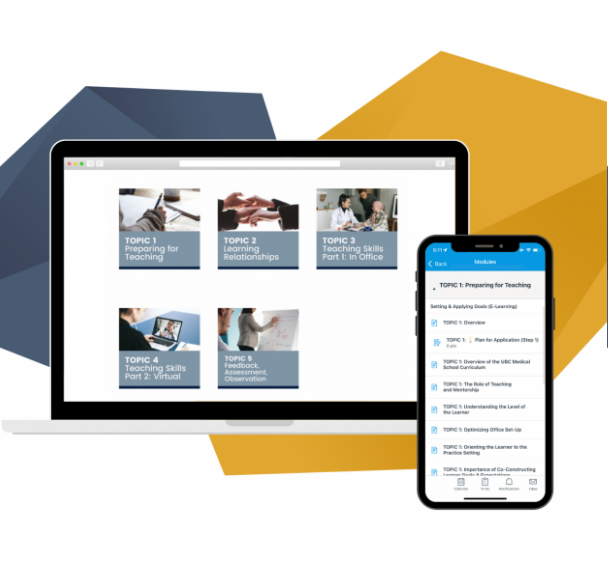
A Day in the Life of a Preceptor (ADITL) is a course designed by family physicians for their colleagues to advance their teaching skills. Physicians throughout the province with all levels of experience are encouraged to join. The program includes five topics, ranging from student orientation to teaching skills and assessment and has a particular focus on working with medical students.
Participants engage through virtual meetings, online modules, and group discussions. At the end of the 10-month program, participants will receive a UBC teaching certificate.
Vist the Day in the Life of a Preceptor Page for more information.
The Teacher Certificate Program (TCP)

The TCP aims to equip teachers in medical education with the basic knowledge and skills to teach effectively. TCP is divided into two programs:
-
- TCP 1: Focus on Foundational Teaching is designed to cover core teaching and assessment competencies for those who teach in the MD Undergraduate Program (MDUP). This certificate is eligible for CME credits.
- TCP 2: Focus on Career Planning & Wellness is designed with attention to the career and personal growth of clinical faculty in the MDUP. Updated with new topics this year! Some topics are eligible for CME credits.
Quick Guides and Modules
Teaching Skills for Community Based Preceptors

This booklet aims to help community-based preceptors teach more effectively. It covers the key concepts in teaching and includes quick tips of important teaching points and practices.
Access the Teaching Skills for Community Based Preceptors booklet here.
Clinical Teaching Mini Modules
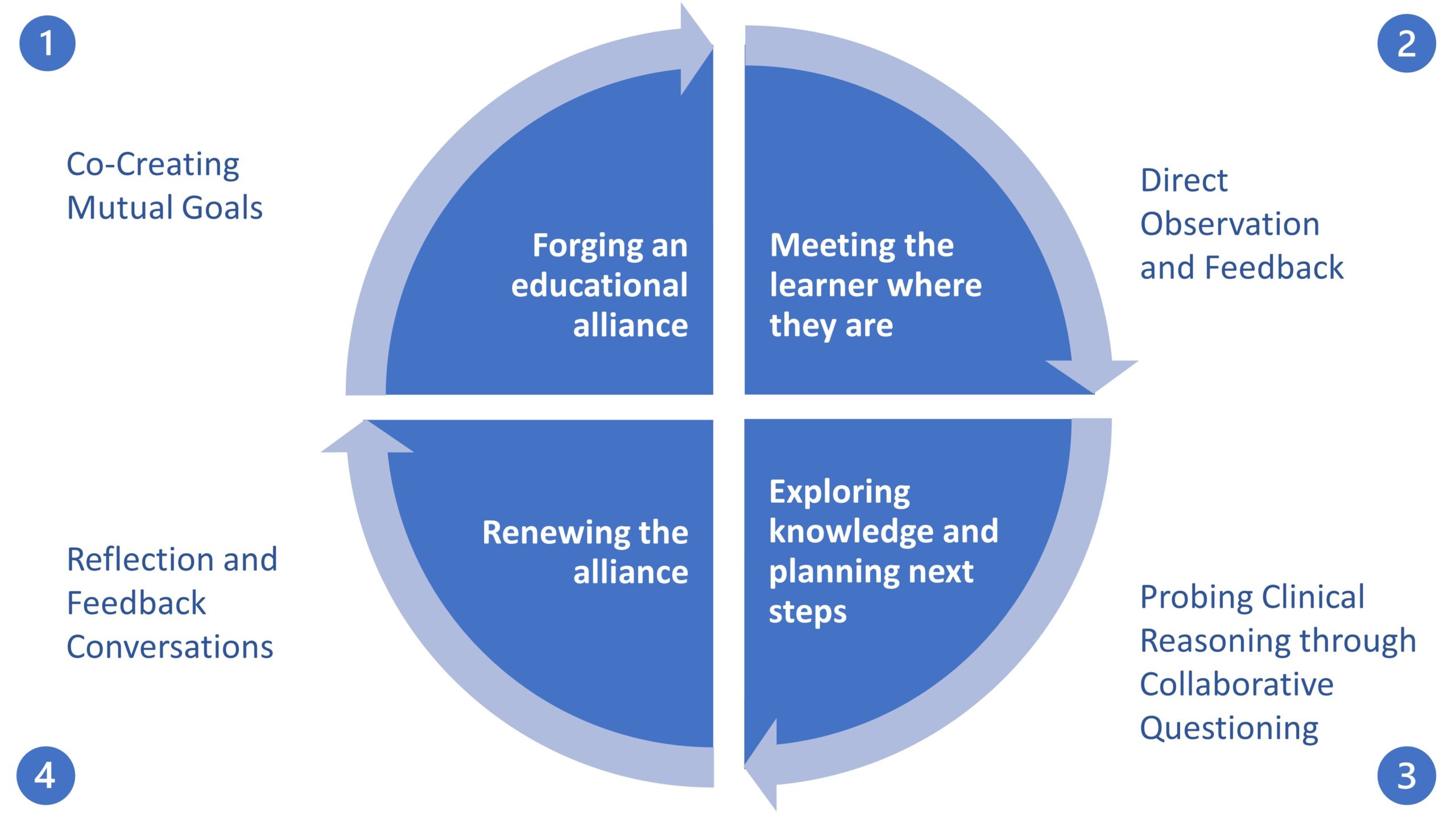
This is a series of four accredited mini-modules on teaching in the setting of patient care. Each module takes up to 15 minutes to complete:
-
- Co-Creating Mutual Goals
- Direct Observation and Feedback
- Probing Clinical Reasoning Through Collaborative Questioning
- Reflection and Feedback Conversations
Accreditation Information: Earn up to 2.0 certified Mainpro+® credits or Royal College of Physicians and Surgeons of Canada Section 1 credits. The total hours (2.0) is for the entire four modules. Each module is 0.5 Section 1 /0.5 CFPC Mainpro+ credit.
Quick Tips for Teaching (QTips)
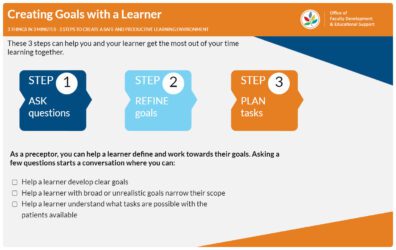
These resources take 3-5 minutes to complete and give teachers a quick, easy way to get tips on key topics including:
-
- Welcoming a Learner
- Creating Goals with your Learner
- Direct Observation & Giving Feedback After a Direct Observation
- Collaborative Questioning in a Clinical Context: One Learner & Multiple Learners
- Welcoming a Learner
Feedback Resources

Providing effective feedback on End of Rotation (EoR) Evaluations: A one page guide providing effective feedack on EoRs for Year 3 in the MD Undergraduate Program.
The Office of Faculty Development has a growing library of feedback resources cover a wide variety of topics. Explore feedback resources in the Teaching Resources section of our website.
A Six-Step Approach to Clinical Education

SNAPPS is a 6-step learner-centered approach to clinical teaching that can be used for developing critical thinking and delivering case presentations. The preceptor takes on the role of a facilitator by promoting critical thinking and acts as a knowledge ‘presenter’ rather than a knowledge source.
Focused Teaching Resources
Layered Learning
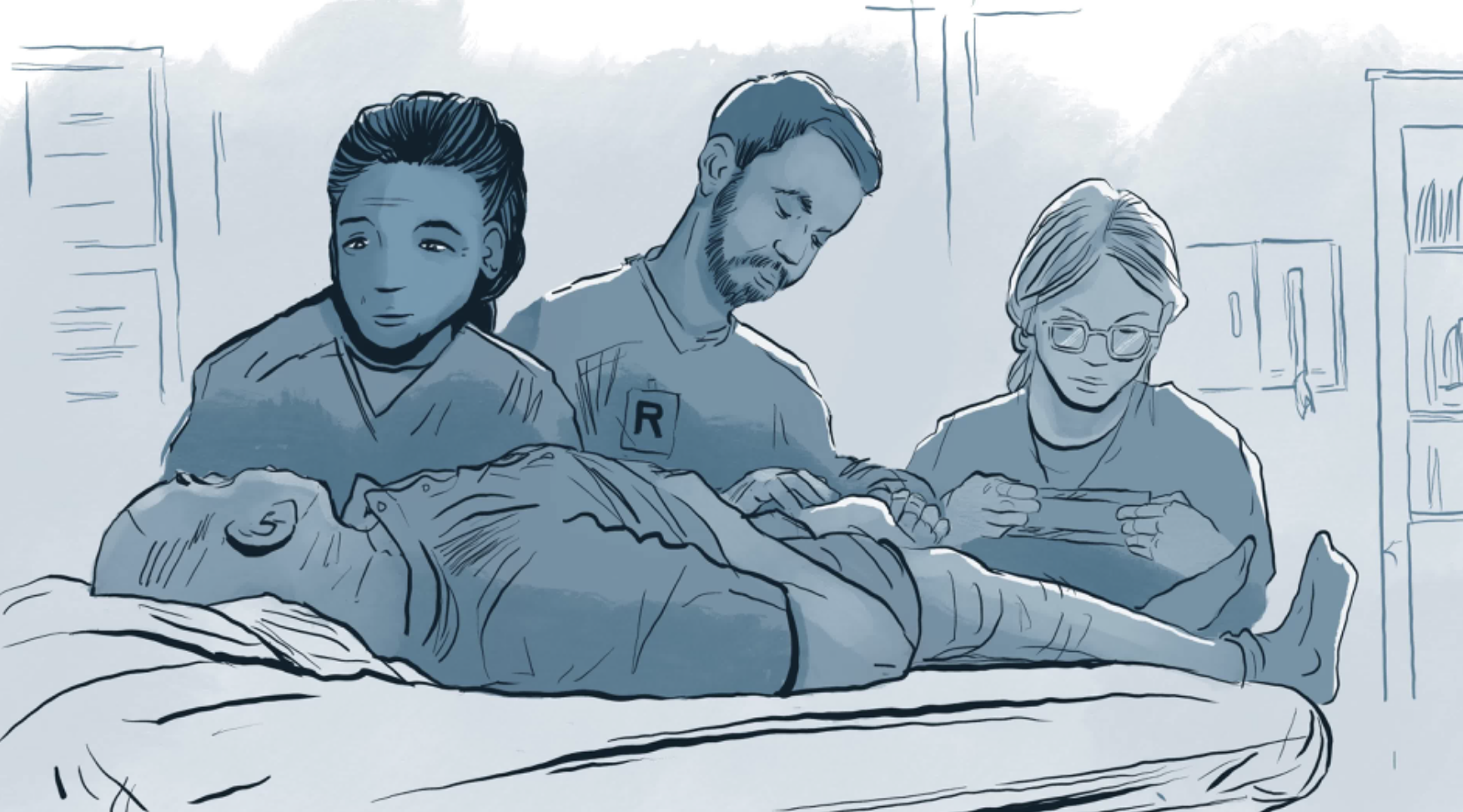
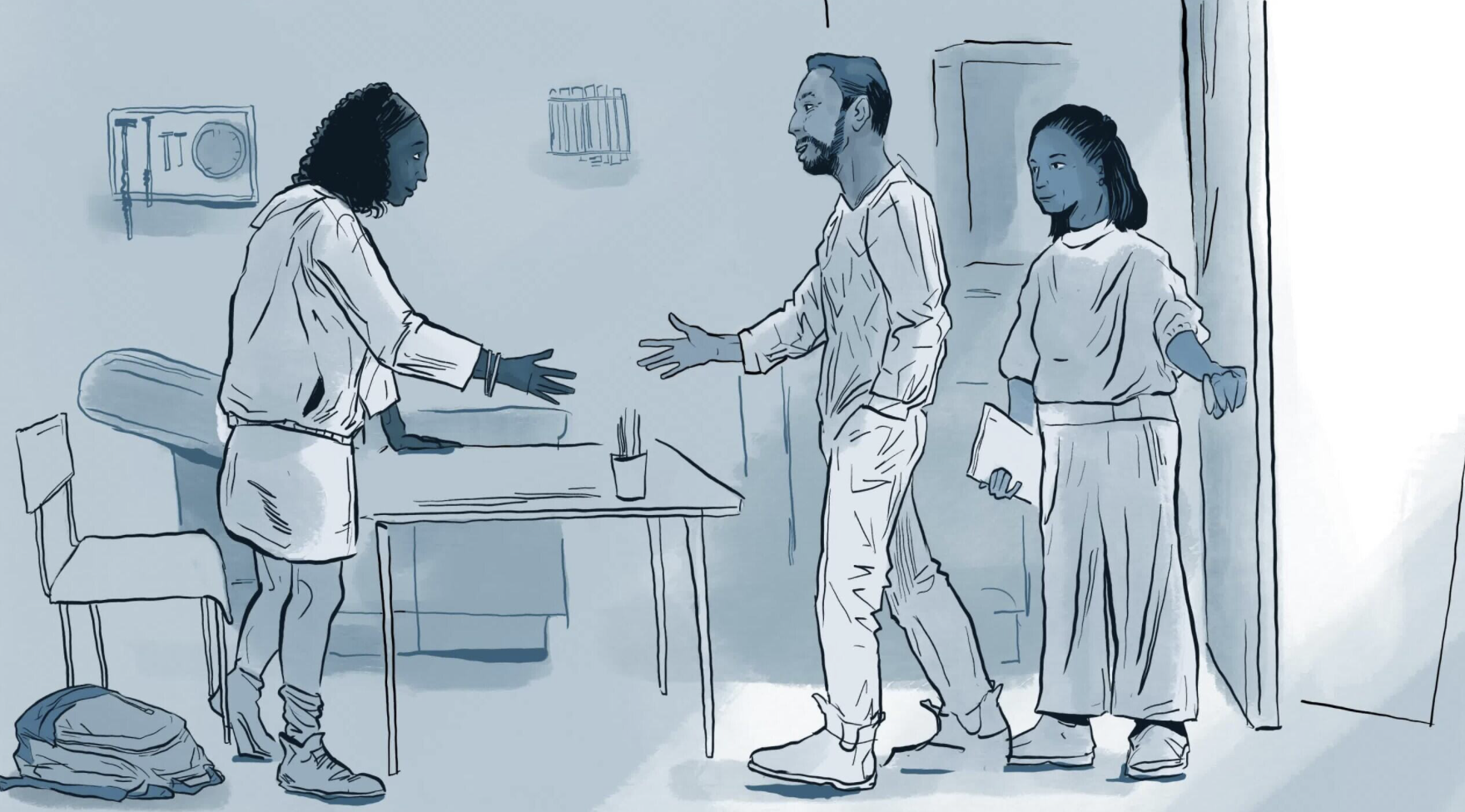
Layered learning in the medical education context refers to having multiple levels of learners and a clinical preceptor working together at the same time to teach and learn from each other. While there is no template for how layered learning should look, we’ve spoken to patients, preceptors, residents, students, and administrators to develop the resources below to support its integration into community-based clinical teaching settings.
On the layered learning page, you will find:
-
- the Layered Learning video series
- advice for before learners arrive, orienting learners, and during layered learning
- scheduling tools
- downloadable email attachments and poster templates for your clinic
- infographics
- frequently asked questions
Teaching with a Generalism Lens
Generalism is the skill and philosophy of seeing the whole person in healthcare by integrating relational, contextual, and meaningful aspects of a patient’s life with their physical health.
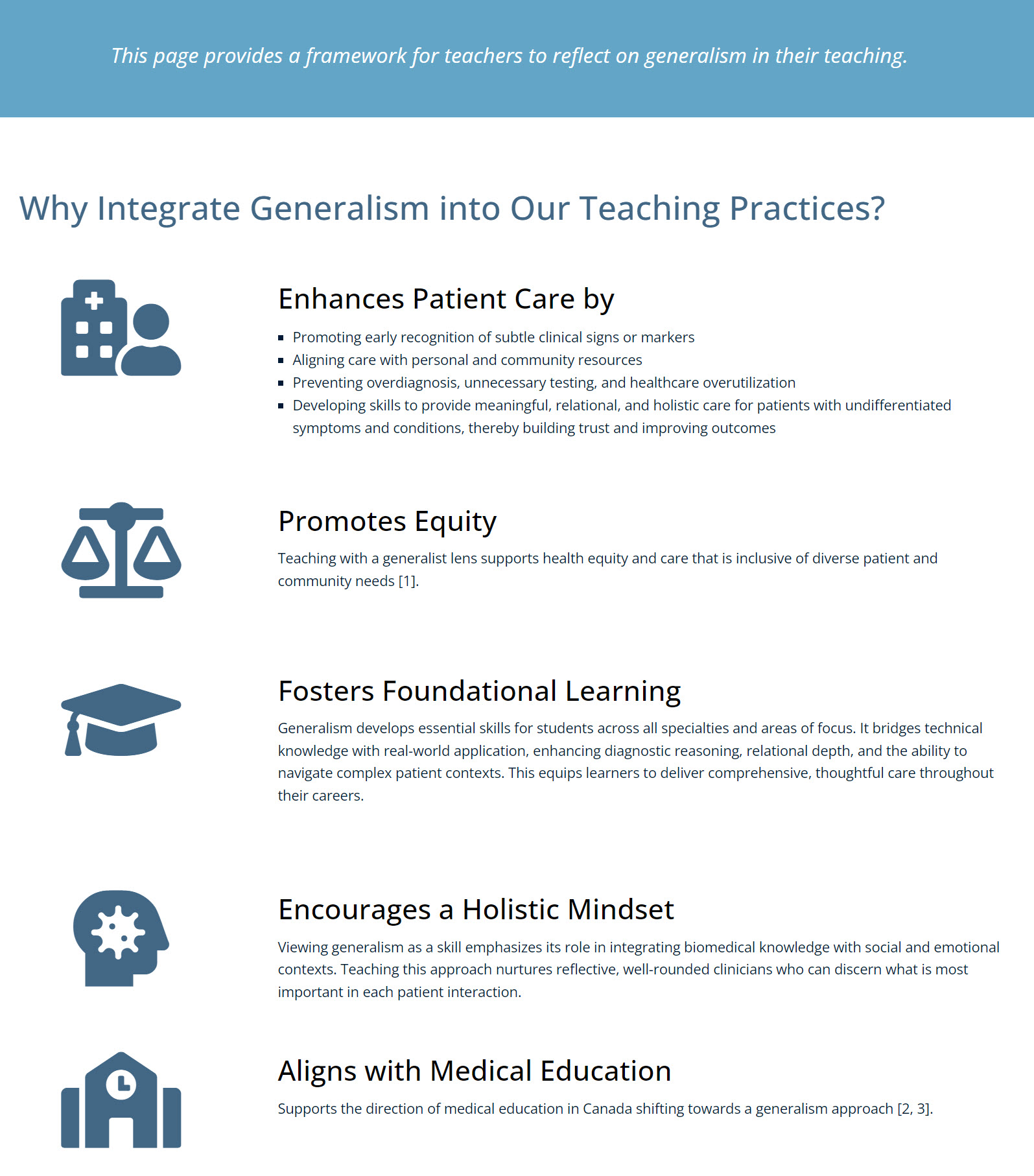
Key principles of teaching with a generalism lens:
- Teach whole person care
- Foster strong doctor-patient relationships
- Prepare students for navigating complexity and uncertainty
- Promote prevention and coordination
- Foster inclusive and collaborative teaching
- Adapt, design and deliver content to promote respect of the scope and role of generalism
We recognize that you are likely already incorporating elements of generalism into your teaching and professional practice. While the term “generalism” provides a label, it exists as a range, with individuals engaging with it in varying ways and to different extents.
For more in depth information on teaching with a generalism lens, including how generalism principles can be integrated into a lecture setting, visit Faculty Development’s Generalism page.
Resources for Clinical Teachers of Medical Students in Years 3&4

This page provides a comprehensive list of curriculum and assessment resources for Year 3 and Year 4 Clinical Preceptors including Workplace Based Assessment (WBA) Orientation, Clinical Procedures and Patient Encounters, and samples of End of Rotation (EOR), Clinical Performance Review (CPR) and End of Elective (EOE) forms.
Visit the page Years 3 & 4 Resources for Clinical Faculty and Residents.
Additional Teaching Resources
Inclusivity in the Learning Environment

This module provides an introduction to concepts of inclusion and microaggressions, guidance on how to address non-inclusive actions using the ACTION framework, and outlines inclusive environment expectations as per the Faculty of Medicine. The module promotes collaborative discussions and/or self- reflection that results in collective learning about inclusive practices.
Access the Module: Inclusivity in the Learning Environment for Medical Faculty
There is also a PowerPoint version intended for group facilitation and is CME accredited for group learning credits.
Recognize and Respond to a Student in Crisis

Recognize and Respond to a Student in Crisis
Created by MDUP Student Affairs and the Office of Faculty Development, this resource helps you identify and differentiate the severity of a student’s distress and enables you to guide them to the most appropriate resources and supports.
View the document Recognize and Respond to a Student in Crisis
Postgraduate Resources

For further resources on postgraduate Family Medicine, please visit the Department of Family Practice Postgraduate Program page.
Teaching Opportunities in Family Medicine
If you’re interested in information on teaching opportunities, please email the following contacts:
Undergraduate Medical Education: Vera Maesen, Program Manager, Family Practice

Postrgraduate Medical Education: Interested in teaching for UBC’s Family Practice Department? Click the link to learn more or contact the program using the email address below